
Meet our team
We bring deep expertise to our work from our combined experience in public service, tech, and academia, positioning us to tackle complex policy problems that traditional methods alone cannot address.
We are all drawn to this work because we are strongly motivated to help the public sector achieve better outcomes.
We are based at New York University’s Center for Practice and Research at the Intersection of Information, Society, and Methodology (PRIISM).
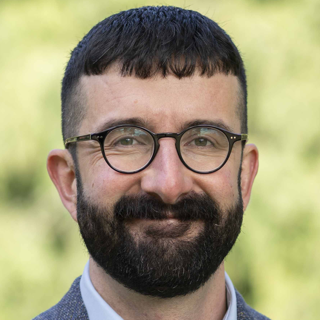
Alex Chohlas-Wood is the founder and director of the ADAPPT Lab. He is an assistant professor of computational social science at NYU Steinhardt’s Department of Applied Statistics, Social Science, and Humanities, and also co-directs the Computational Policy Lab at the Harvard Kennedy School. His research investigates how computational approaches can improve public policy, and he is particularly interested in prototyping and evaluating scientific and technical innovations in applied collaborations with government agencies. He holds a Ph.D. from Stanford University, an M.S. from New York University, and a B.A. from Carleton College.
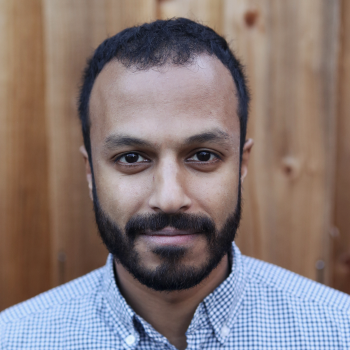
Ravi Shroff is an associate professor of applied statistics at NYU Steinhardt’s Department of Applied Statistics, Social Science, and Humanities, and the co-director of the ADAPPT Lab. His research involves the development and application of statistical and computational methods to issues in criminal justice and child welfare. Ravi studied mathematics at UC San Diego (M.S. and Ph.D.), applied urban science and informatics at CUSP (M.S.), and mathematics and economics at the University of Washington (B.S.).
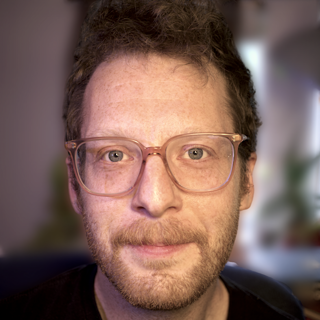
Joe Nudell is the lead engineer and data scientist at the ADAPPT Lab. Joe is interested in how technology can help us understand, talk about, and intervene in big social issues, from mass incarceration to the housing crisis. Prior to joining the lab, Joe was a Software Engineer building analytics systems at Dropbox, and before that he received his A.B. and A.M. from the University of Chicago.
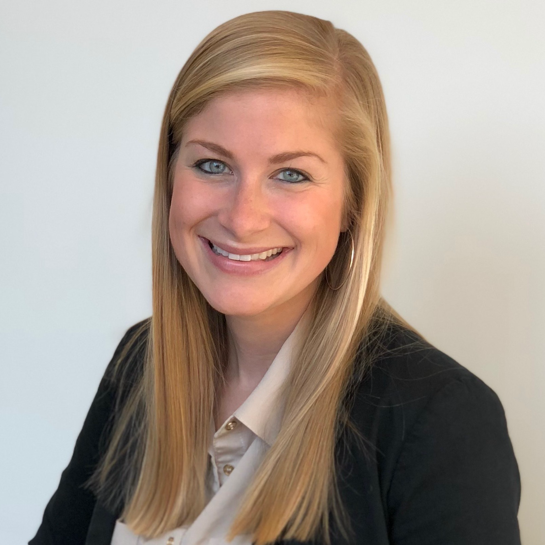
Charlotte Tuminelli is the Project Lead for the ADAPPT Lab. She also serves as the Executive Director of the Computational Policy Lab at Harvard Kennedy School, where she leads the lab’s mission of using technological and computational approaches to address critical issues in criminal justice, education, voting rights, and beyond. Previously, she served as the Director of Evidence for Policy Design at the Harvard Kennedy School and consulted for various nonprofits. Charlotte holds an Ed.M. from the Harvard Graduate School of Education and a B.A. from Stonehill College.
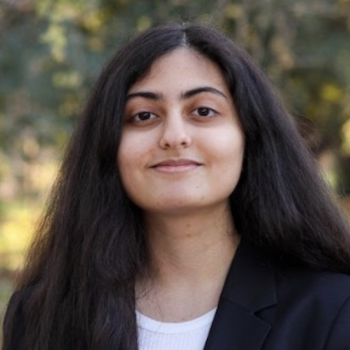
Megha Chouthai is a master’s student in NYU’s Applied Statistics for Social Science Research (A3SR) program. She graduated from UC San Diego with a B.S. in Cognitive Science and a B.S. in Mathematics-Computer Science. Her research interests lie at the intersection of generative AI, statistical computing, and social impact, particularly in how emerging technologies can be leveraged to strengthen research, improve healthcare practices, and support evidence-based decision-making. Before coming to NYU, she worked in systems neuroscience and extended-reality (XR) research, as well as at a health-tech startup.
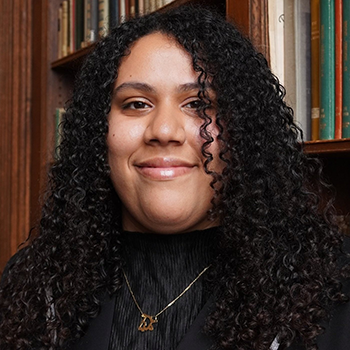
Aya is a junior at Harvard College studying Government and Economics, with a particular focus on public policy, economic systems, and social impact. She is passionate about understanding how individuals and institutions can create effective and meaningful change.
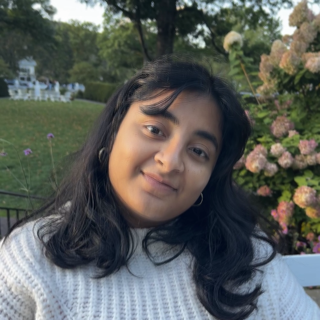
Zoha Ibrahim is a junior at Harvard College studying Social Studies and Modern Middle Eastern Studies. She is passionate about exploring the intersection of immigration and incarceration policy in the United States.
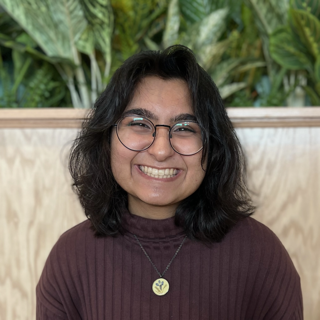
Neha is a senior at Harvard College. She is pursuing a B.A. in Statistics and Government, and she is interested in data science and its potential to help create more equitable social, legal, and political systems.
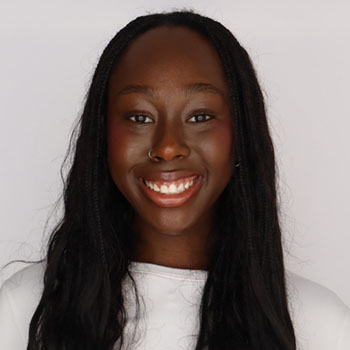
Michelle Lamptey is a research fellow at New York University with PRIISM, working toward a master’s degree in applied statistics and a concentration in data science for social impact. She earned her undergraduate degree with a major in sociology and a minor in criminal justice. With interests in public policy, data visualization, and reporting, Michelle seeks to understand the role she plays in the work and ways to make it better for everyone.
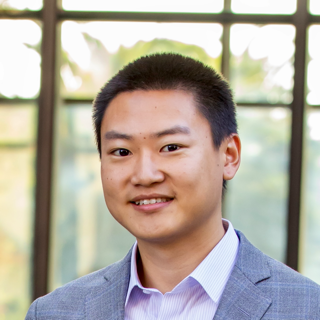
Zehua is a Ph.D. student in Government & Social Policy at Harvard University and a J.D. candidate at Stanford Law School. He is interested in deploying computational techniques to the study of local politics, political discourse, and the criminal justice system. Zehua holds a B.S. in Computer Science from the University of Michigan and worked as an NLP & Law research fellow at Stanford before grad school.
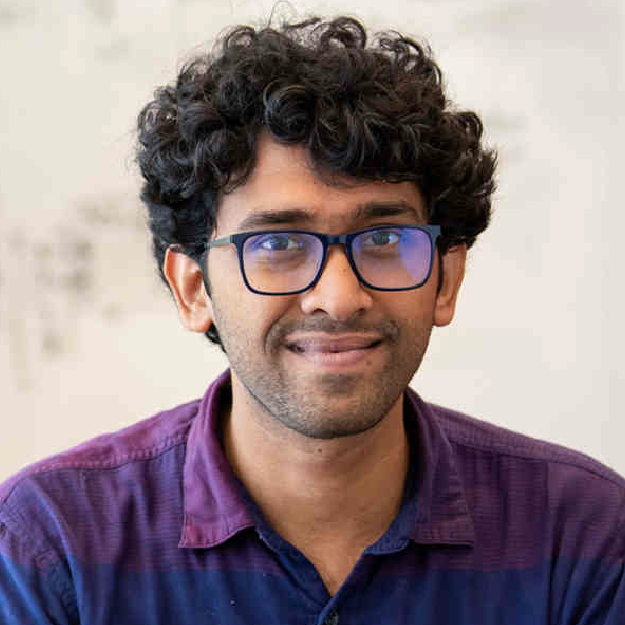
Kaushik Mohan is a PhD student in the Statistics and Computational Social Science program at NYU and a researcher at the ADAPPT Lab. He was previously a master’s student in the A3SR program at NYU, a Data Science for Social Good fellow, and worked in data science consulting for nonprofits. His research interests are in developing methods for statistical analysis of networks and sequence analysis for applications in criminal justice, sociology, and education.

Ruiting Shen is a master’s student in the A3SR program at NYU. She is interested in applying statistical and machine learning models to psychological and educational latent variable modeling, statistical applications of large language models (LLMs), and research on model evaluation and tool development. In practice, she also enjoys learning programming languages and working on data processing, management, and statistical consulting.
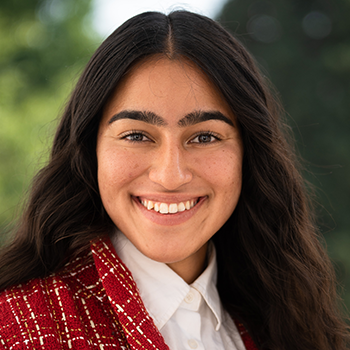
Muskan Walia is a PhD student and a researcher at the ADAPPT Lab. She graduated from the University of Utah with degrees in mathematics and philosophy. She is interested in using artificial intelligence, machine learning, and scientific computing methods to tackle pressing social issues and improve institutional decision-making processes.
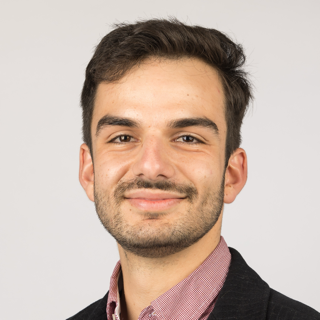
Jacob Wallace is a second-year student in the A3SR program at NYU Steinhardt, where he is studying computational methods to identify and address social inequity. He earned his bachelor’s degree in Sociology and Mathematics at Hamilton College, and previously worked in educational consulting, researching and developing accessible programs for universities nationwide. His interest in the potential for technology to scale problem solving in the social and environmental fields led him to work deploying and applying computer vision models to automate fraud detection in the European timber trade.

 Algorithms, Data, and Public Policy Technology (ADAPPT) Lab